JVM Architecture and Components
1. What is Virtual Machine?
A virtual machine is a software simulation of a physical machine that can execute programs.
Common categories
- System/Hardware VM
- Runs full operating systems (example: VMware, VirtualBox).
- Process/Application VM
- Runs a single program in an isolated runtime (example: JVM).
JVM belongs to the application/process VM category.
2. What is JVM?
JVM (Java Virtual Machine) is an abstract runtime machine that executes Java bytecode.
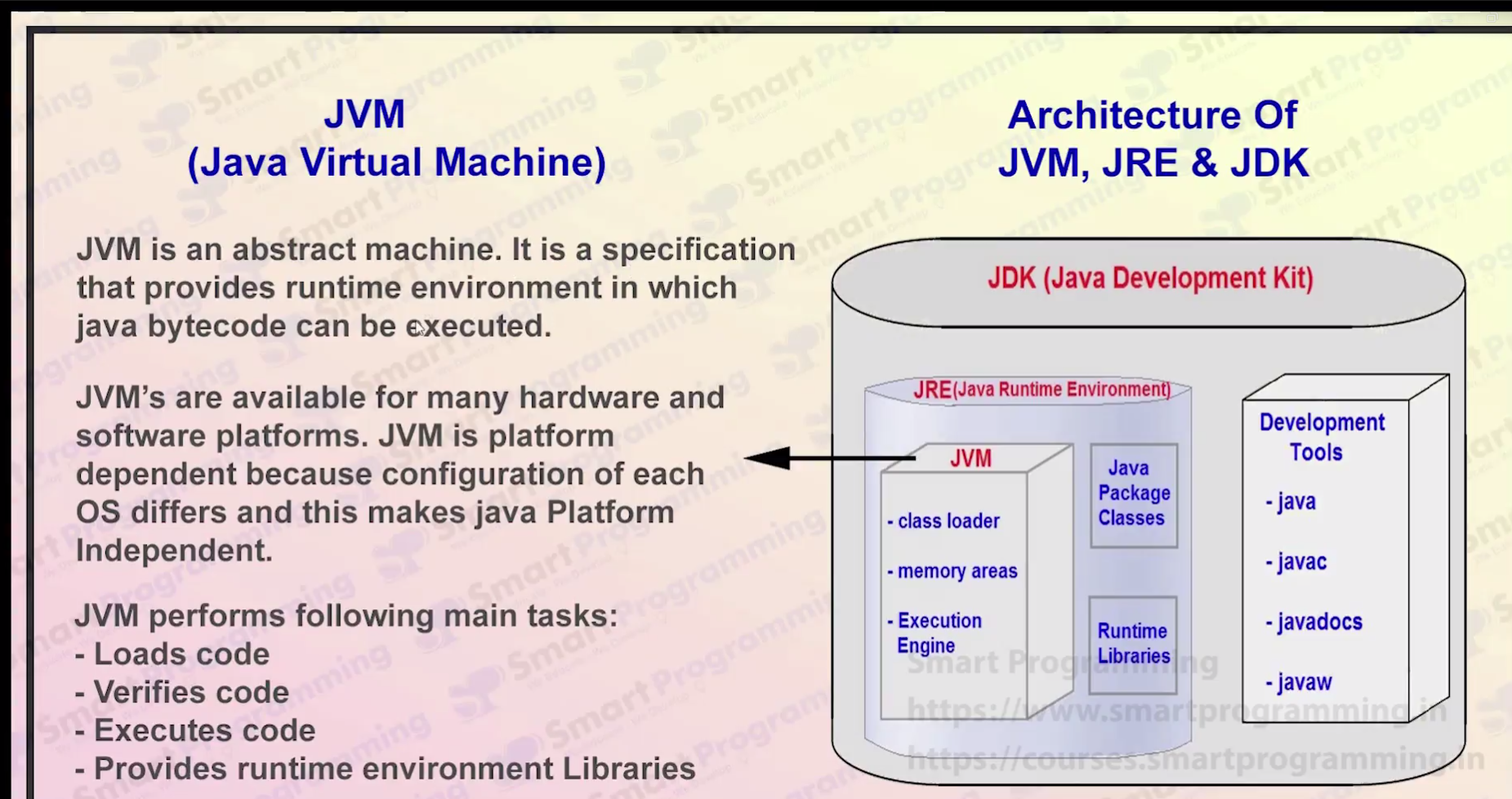
Main responsibilities
- Load bytecode
- Verify bytecode
- Execute bytecode
- Provide runtime services (memory, garbage collection, native integration)
3. JVM, JRE, JDK Difference
| Term | Full Form | Contains | Primary Use |
|---|---|---|---|
| JVM | Java Virtual Machine | Runtime execution engine | Execute bytecode |
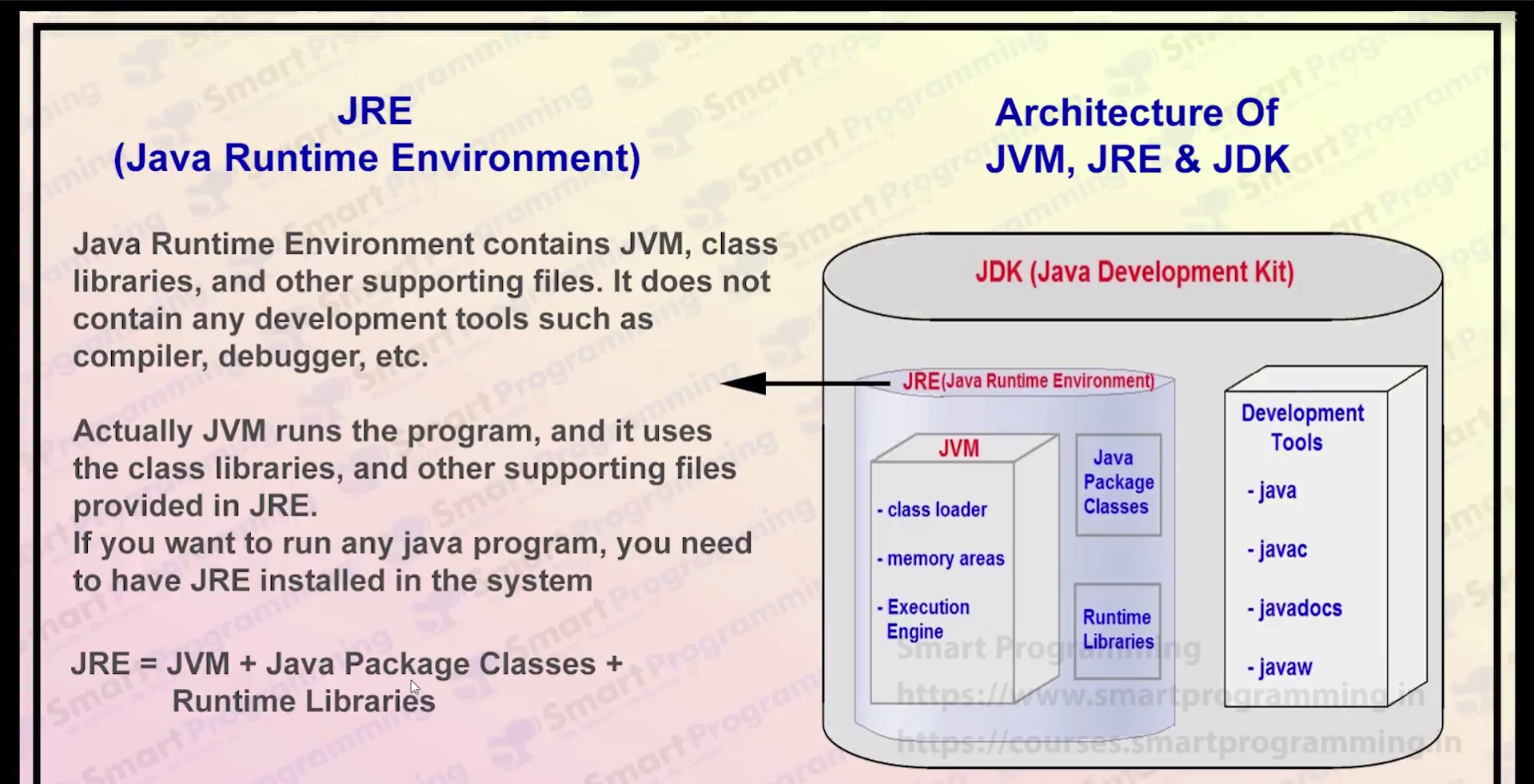
| JRE | Java Runtime Environment | JVM + core Java libraries + runtime files | Run Java apps |
| JDK | Java Development Kit | JRE + developer tools (javac, javadoc, etc.) | Develop and run Java apps |
Formula view
JRE = JVM + Runtime LibrariesJDK = JRE + Development Tools
4. High-Level JVM Internal Blocks
- Class Loader Subsystem
- Runtime Memory Areas
- Execution Engine
- JNI (Java Native Interface)
- Native Method Libraries
You will explore each in next chapters.
5. Platform Independence vs JVM Dependency
- Java source is compiled once to bytecode.
- Bytecode is platform-independent.
- JVM implementation is platform-specific.
That is why Java is called: "Write Once, Run Anywhere" (with compatible JVM).
6. Quick Interview Answer
Q: What is JVM?
JVM is an abstract machine that provides runtime environment to execute Java bytecode.
Q: Is JVM system VM or process VM?
JVM is an application/process-based virtual machine.
Q: Difference between JDK, JRE, JVM?
JDK is for development, JRE is for runtime, JVM is core execution engine inside JRE.